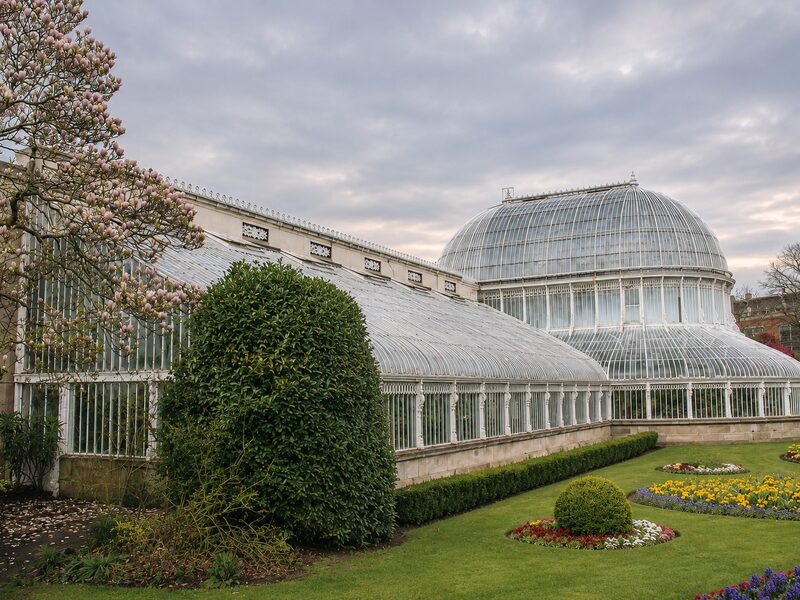
Botanic Gardens & Palm House
An 1830s public park with one of the earliest curvilinear iron-and-glass palm houses in the world.
Botanic
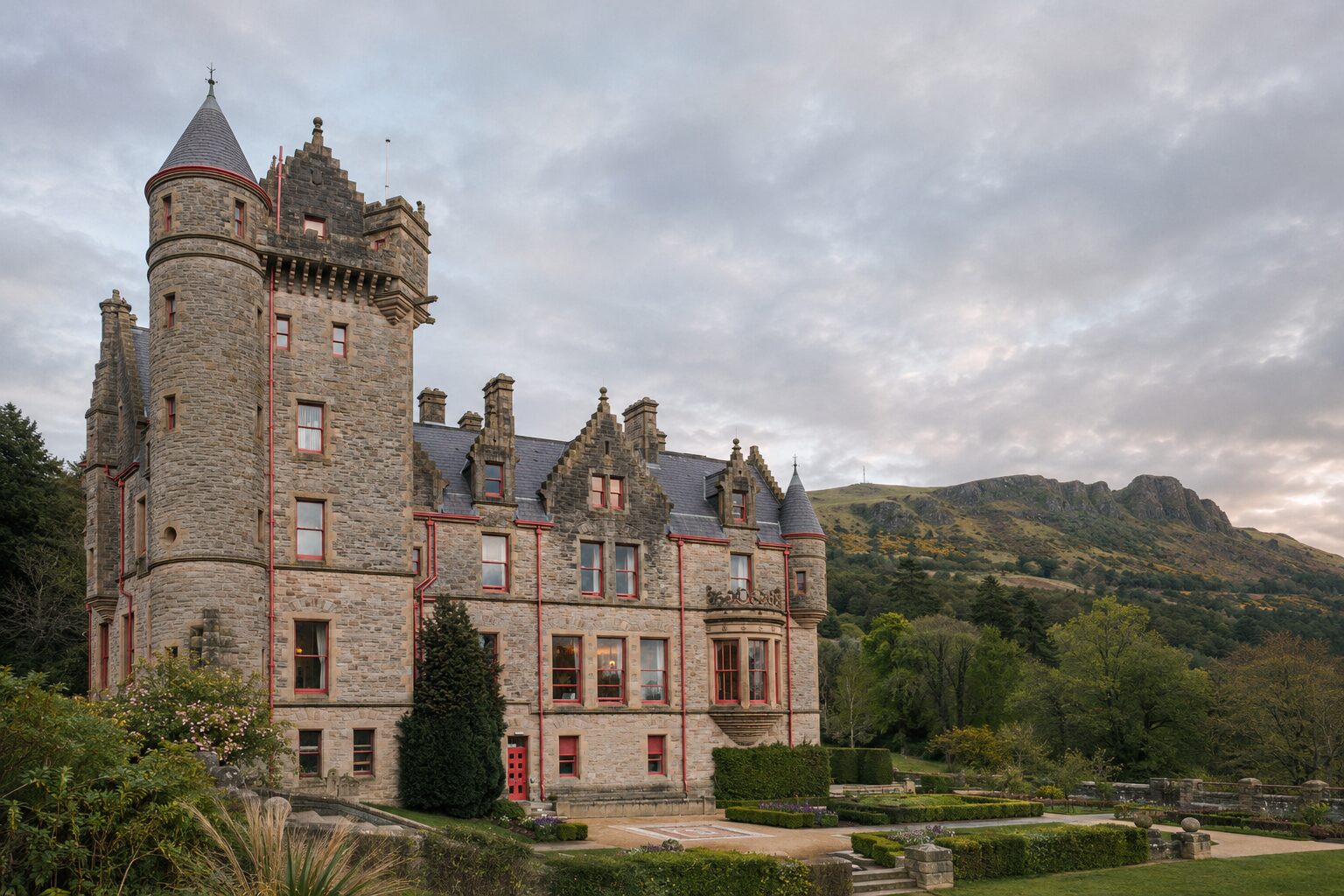
Cave Hill is the great basalt escarpment that looms over north Belfast, its profile said to have inspired Jonathan Swift's sleeping giant in Gulliver's Travels. The climb to the summit — known as Napoleon's Nose — delivers the finest view in the city, out over the rooftops, the shipyard cranes and Belfast Lough.
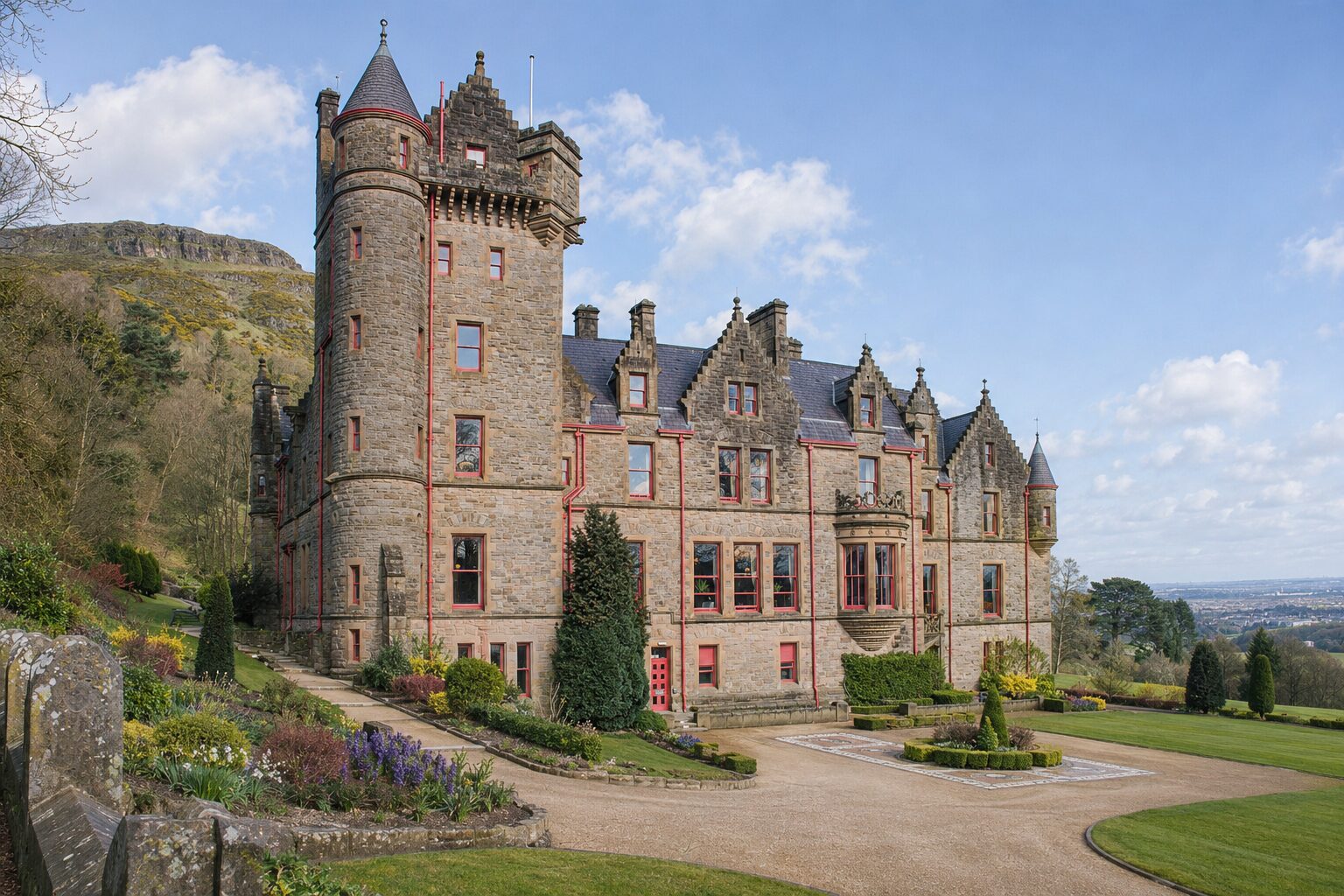
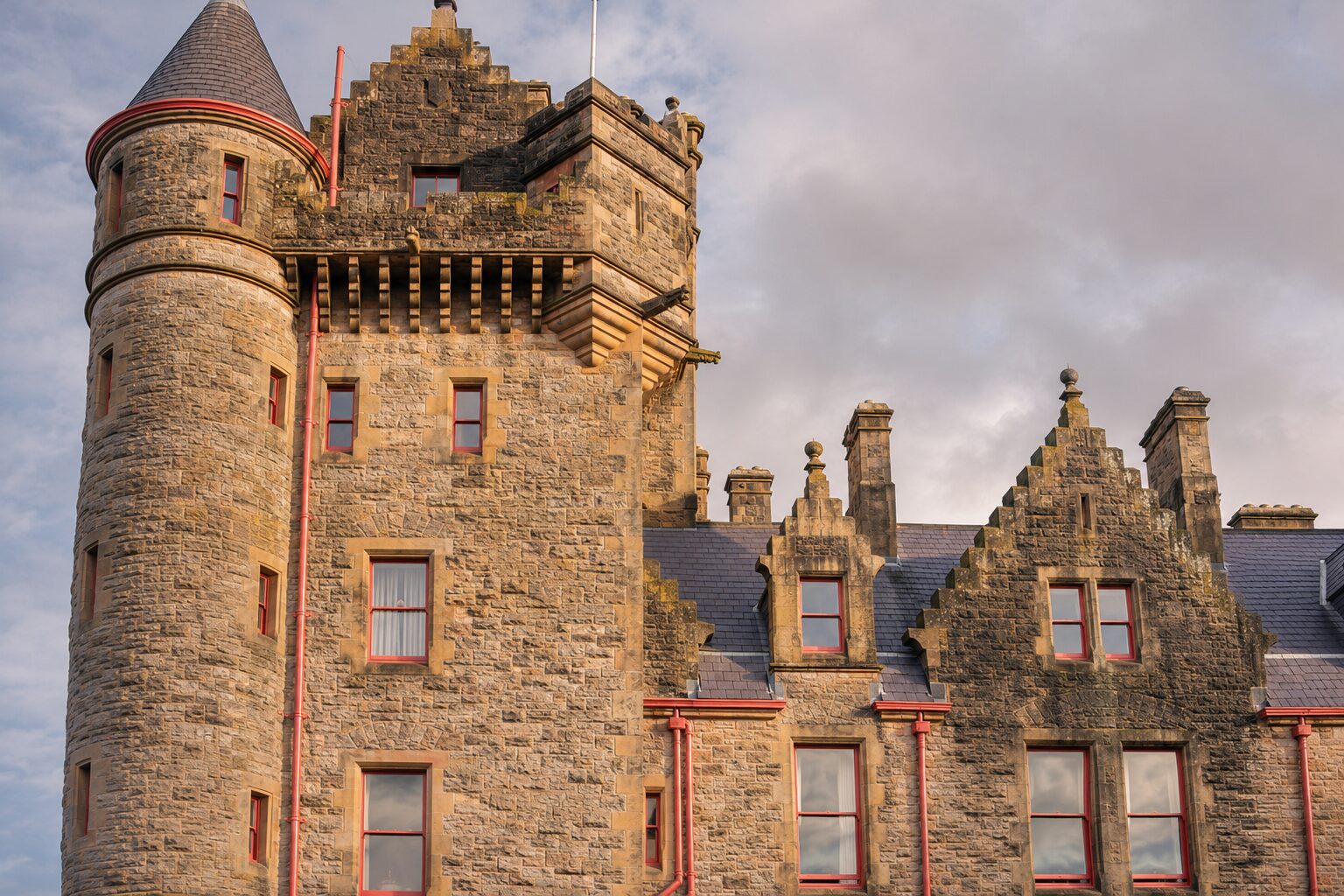
Halfway up sits Belfast Castle, a Scottish-baronial mansion built by the Donegall family in the 1870s and now a free-to-enter visitor spot with a terraced garden, a small heritage exhibition and a café. The gardens hold the legend that a cat must always be present for the castle's luck to hold — look for the nine cat motifs hidden around them.
Above the castle, waymarked trails climb through woodland to the caves and the summit cairn. It is a proper hill walk, steep in places, rewarded by one of those views that reframes the whole city laid out beneath you.
An 1830s public park with one of the earliest curvilinear iron-and-glass palm houses in the world.
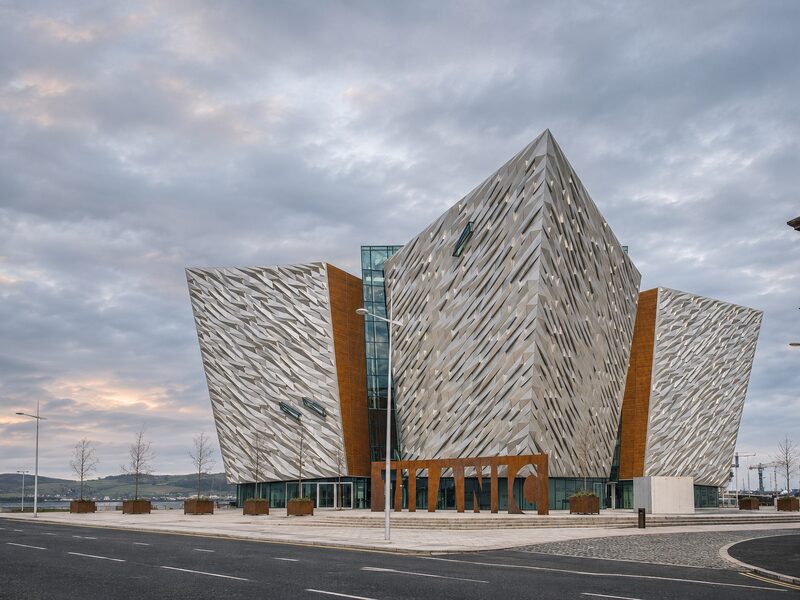
A six-storey landmark on the Harland & Wolff slipways, telling the ship's whole story from drawing board to the ocean floor.
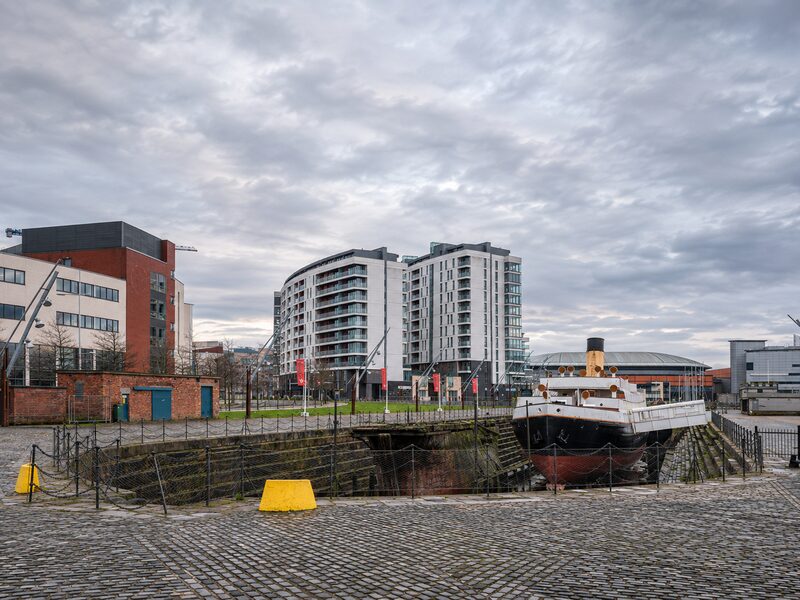
The tender that ferried first-class passengers out to Titanic at Cherbourg, now restored in her original Belfast dry dock.